


Size can reassure, but it’s above all the proof that drives purchase. An SMB can inspire as much trust as a large enterprise by putting concrete reassurance mechanisms in place: clear identity, qualifying proof, a credible site, managed security, authenticated reviews, and unambiguous messaging. The goal isn’t to imitate the giants’ codes, but to reduce perceived risk with elements adapted to your reality.
The short answer: yes—if you reduce perceived risk
Trust happens when the client thinks: “this provider will keep their promise, without unpleasant surprises.” It’s a combination of real‑company signals (who are you?), qualifying proof (why you?), operational clarity (how does it work?), and digital signals (your site, your security, your legal notices). An SMB can excel on each of these, often faster than a big group.
Real‑company signals: verifiable identity and required notices
Start by eliminating any doubt about who you are: an “About” page with the legal entity, address, leadership, registration number, terms, and contact options in plain view. In France, a professional website must display complete and easily accessible legal notices (publisher identity, host, contact details, etc.). This is both a regulatory duty and a strong signal of seriousness. Reference: Ministry of the Economy. ([economie.gouv.fr](https://www.economie.gouv.fr/entreprises/developper-son-entreprise/innover-et-numeriser-son-entreprise/mentions-sur-votre-site-internet-les-obligations-respecter?utm_source=openai))
Qualifying proof: reviews, case studies, and method
Reviews and testimonials must be truthful, tied to real engagements, and published through an explicit process (collection, moderation, publication). In Europe, the so‑called “Omnibus” Directive requires not presenting content as consumer reviews when the origin isn’t verified, and to inform users about the measures taken to ensure authenticity. Text on EUR‑Lex. ([eur-lex.europa.eu](https://eur-lex.europa.eu/legal-content/EN/ALL/?uri=CELEX%3A32019L2161&utm_source=openai))
In France, Decree No. 2017‑1436 specifies information obligations applicable to online reviews (moderation methods, publication timelines, whether compensation exists, etc.). Clearly announce your reviews policy, follow it, and reject fake reviews—all key to credibility and compliance. See Légifrance. ([legifrance.gouv.fr](https://www.legifrance.gouv.fr/jorf/id/JORFTEXT000035720935?authuser=0&utm_source=openai))
Case studies (even anonymized), a step‑by‑step method, tangible deliverables, and, when possible, measurable outcomes provide a decisive edge. Avoid impersonal “logo walls”: prefer short narratives that explain context, objective, approach, obstacles, and outcome.
Your website as the cornerstone of reassurance
Your site must prove, in a few seconds, that a project or a payment can be safely entrusted to you. Three foundations:
- Information architecture: clear hierarchy; frictionless “Offer,” “Method,” “Work,” “Pricing / Terms,” and “Contact” pages.
- Brand and readability: explicitly stated positioning; benefits and proof visible above the fold.
- Technical trust: site on HTTPS, solid performance, and no security warnings. Google has confirmed that HTTPS is among the signals considered for experience and ranking. Google Search Central article. ([developers.google.com](https://developers.google.com/search/blog/2014/08/https-as-ranking-signal?hl=en&utm_source=openai))
Add Organization structured data (logo, legal name, contact information, official profiles) to help search engines identify you correctly and display reliable information in results. Google documentation. ([developers.google.com](https://developers.google.com/search/docs/appearance/structured-data/organization?authuser=19&utm_source=openai))
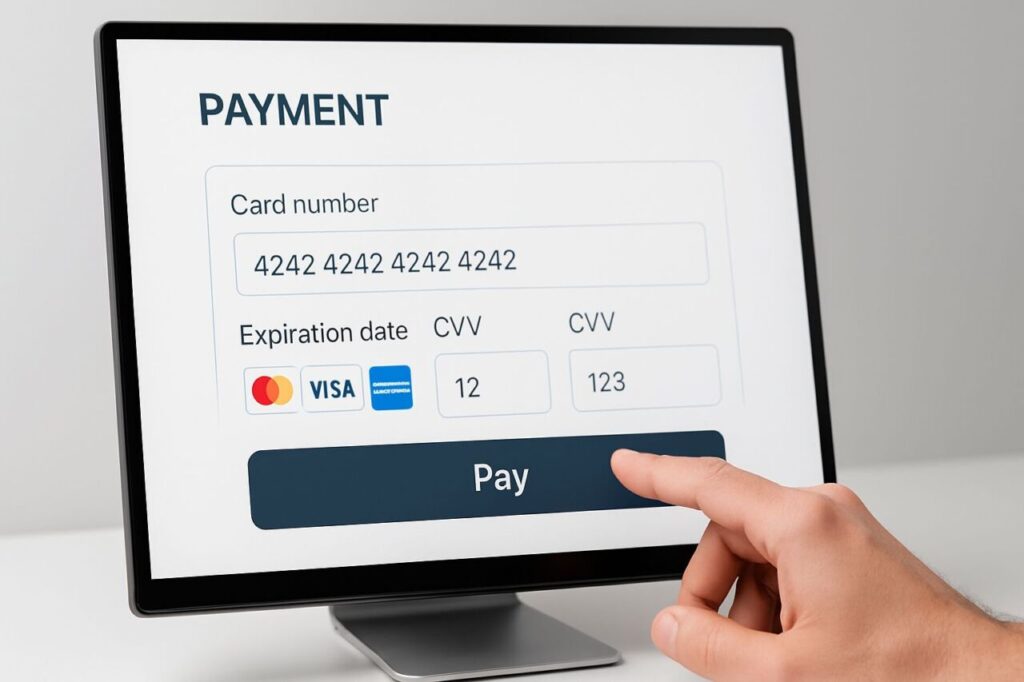
In e‑commerce and more broadly at payment time, the perception of security (clear fields, relevant trust marks, helpful error messages, recognized payment options) directly influences order completion. Baymard’s research confirms that trust cues at checkout remain a major improvement lever. Baymard 2024 recap. ([baymard.com](https://baymard.com/blog/checkout-2024-launch?utm_source=openai))
Make your expertise visible without mimicking big corporations
Large groups multiply labels and corporate pages. An SMB can do better by being specific: explain a method, publish lessons learned, show the team, detail a realistic scope of work, and offer a structured diagnostic. Start with your marketing strategy and positioning: perception is part of commercial reality. The site and UX then serve that message (websites, SEO & GEO).
Security and compliance: the right level, not “all‑badges”
Baseline security is non‑negotiable: properly configured HTTPS, backups, managed passwords, limited access, and update policies. For sensitive sectors, formalizing an approach (for example, aligning with the principles of an ISMS such as ISO/IEC 27001) can bring extra reassurance, even without aiming for certification immediately. ISO/IEC 27001 reference. ([iso.org](https://www.iso.org/standard/27001?s=cpa&utm_source=openai))
AI used well: an amplifier, not a showcase
AI helps prepare FAQ outlines, summarize case studies, harmonize policies (SLAs, incident management), or surface your proof via a RAG connected to your body of work and documents. But trust starts with human editorial choices and a clear method. Automating a fuzzy promise only accelerates distrust. If you structure your knowledge, AI becomes a useful copilot (see our work on AI, RAG & vector search).
30‑day action plan for tangible “SMB trust”
- Days 1–3: frame your value proposition and must‑have proof (clients, cases, labels, validated figures).
- Days 4–7: verify legal notices, ToS, and reviews policy; document your review collection and publication process. EU Directive; FR decree. ([eur-lex.europa.eu](https://eur-lex.europa.eu/legal-content/EN/ALL/?uri=CELEX%3A32019L2161&utm_source=openai))
- Days 8–15: revamp the home and key pages: benefits, proof, method, calls to action. Add Organization structured data and verify HTTPS. Google docs; HTTPS signal. ([developers.google.com](https://developers.google.com/search/docs/appearance/structured-data/organization?authuser=19&utm_source=openai))
- Days 16–25: produce 2–3 short case studies and a “Method” page. Prepare an initial diagnostic to start engagements.
- Days 26–30: refine the conversion point: reliable form, clear contact options, recognized payment methods, reassurance copy at the critical moment. Baymard reference. ([baymard.com](https://baymard.com/blog/checkout-2024-launch?utm_source=openai))
Frequently asked questions about SMB trust
Should we pursue expensive security labels?
No, not by default. First put hygiene in place: HTTPS, access management, backups, procedures. In high‑risk or regulated environments, gradual alignment with a standard (e.g., ISO/IEC 27001 principles) can be relevant to formalize your approach. ISO/IEC 27001. ([iso.org](https://www.iso.org/standard/27001?s=cpa&utm_source=openai))
How can we display reviews without risking non‑compliance?
Describe your process (collection, verification, moderation), publish clear criteria, and never buy reviews. In Europe, transparency rules for reviews apply to both merchants and platforms. “Omnibus” Directive; French decree. ([eur-lex.europa.eu](https://eur-lex.europa.eu/legal-content/EN/ALL/?uri=CELEX%3A32019L2161&utm_source=openai))
Are “badges” enough to reassure?
Not if they’re out of context. What matters at decision time: process clarity, recognized payment options, helpful error messages, visible policies, and a technically sound site. Baymard’s analyses show these outweigh piling up icons. Baymard study. ([baymard.com](https://baymard.com/blog/checkout-2024-launch?utm_source=openai))
Do we need a “Pricing” page if every project is custom?
Yes—if it’s honest and educational: ranges, cost drivers, sample packages, and the steps of an initial diagnostic. The goal is to reduce uncertainty, not freeze a price.
To structure these workstreams with an outside, senior perspective blending marketing, digital, and AI, you can seek dedicated support. Let’s talk: get in touch.
Sources and references
- Organization structured data | Google Search Central documentation — Google Developers
- HTTPS as a ranking signal — Google
- Directive (EU) 2019/2161 (Omnibus Directive) — EUR-Lex
- Décret n° 2017‑1436 du 29 septembre 2017 relatif aux avis en ligne — Légifrance
- Mentions sur votre site internet : les obligations à respecter — Ministère de l’Économie (economie.gouv.fr)
- 2024 E‑Commerce Checkout: Expanded and Updated Checkout Research Findings — Baymard Institute